
Greece is welcoming more international travellers in 2026, but one figure stands out: travel through the country’s road border crossings is growing far faster than air arrivals. The trend could reshape how we think about tourism, mobility and car travel across mainland Greece.
Greece’s tourism numbers remain strong in 2026. But behind the headline growth in international arrivals, a less obvious change is taking place.
More travellers are reaching the country by road.
According to the latest available data from the Bank of Greece, inbound traveller flows increased by 15.4% during the first half of 2026, reaching approximately 13.49 million travellers, compared with 11.69 million during the same period in 2025.
Air travel continued to grow, with traveller flows through airports increasing by 7.3%.
But traffic through Greece’s road border-crossing points increased by an extraordinary 49.3% year-on-year.
The gap is significant — and it suggests that Greece’s tourism story is increasingly about more than airports, islands and traditional fly-and-stay holidays.
Road travel is becoming harder to ignore
The trend was visible even before the summer peak.
During the first five months of 2026, traveller flows through road border crossings were already 64.5% higher than a year earlier, compared with a 9.5% increase through airports.
In May alone, road-border traffic increased by 55.1%.
By June, growth had moderated but remained strong: road-border traveller flows were still 20.7% higher than in June 2025, while airport flows increased by 4%.
That makes road travel one of the most interesting mobility developments in Greek tourism this year.
It is also worth putting the figures into perspective. In the whole of 2025, traveller flows through road border crossings increased by just 6.9% compared with the previous year. The acceleration seen during the first half of 2026 is therefore notable.

Why might road travel to Greece be growing?
There is unlikely to be a single explanation.
Greece occupies a natural road-travel position for visitors arriving from the Balkans and wider southeastern Europe. Northern Greece provides direct access to destinations such as Thessaloniki, Halkidiki, Kavala, Pieria, Epirus and eventually much of the rest of the mainland.
One structural change has also made travel within the region easier.
Since 1 January 2025, Bulgaria and Romania have been full members of the Schengen Area, with checks on persons at their internal land borders removed. The European Commission has specifically noted that the change was expected to support travel, trade and tourism.
It would be too early to attribute Greece’s 2026 road-arrival growth directly to Schengen enlargement alone. Fuel prices, holiday costs, travel preferences, regional economic conditions and destination accessibility can all influence whether travellers choose to fly, drive or combine several forms of transport.
But the broader direction is clear: road accessibility matters increasingly to Greek tourism.
A different travel map for Greece
For decades, discussions about international tourism in Greece have naturally focused on airports.
Athens, Thessaloniki and the country’s island airports remain essential gateways. Yet road tourism creates a different geographic pattern.
A traveller arriving overland is not automatically tied to an airport catchment area.
Road travel can make it easier to combine several destinations during a single trip: a city with a beach destination, the mainland with a ferry connection, or major attractions with smaller towns that may not have direct international air links.
That matters for areas such as Central Macedonia, Epirus, Thessaly, Western Greece and the Peloponnese, where private mobility can play an important role in the visitor experience.
The Bank of Greece’s final figures for 2025 already showed how widely international tourism is distributed across the country. Attica was the most visited region, while Central Macedonia recorded more than 7.1 million visits during the year.
Growing road connectivity could help reinforce this more distributed tourism model.
What does this mean for car rental?
This is where an important distinction needs to be made.
A 49.3% rise in road-border traveller flows does not mean a 49.3% increase in rental-car demand.
Many travellers who cross into Greece by road are already travelling in their own vehicle. Others may arrive by coach, organised transport or a combination of transport modes.
The two statistics should not be confused.
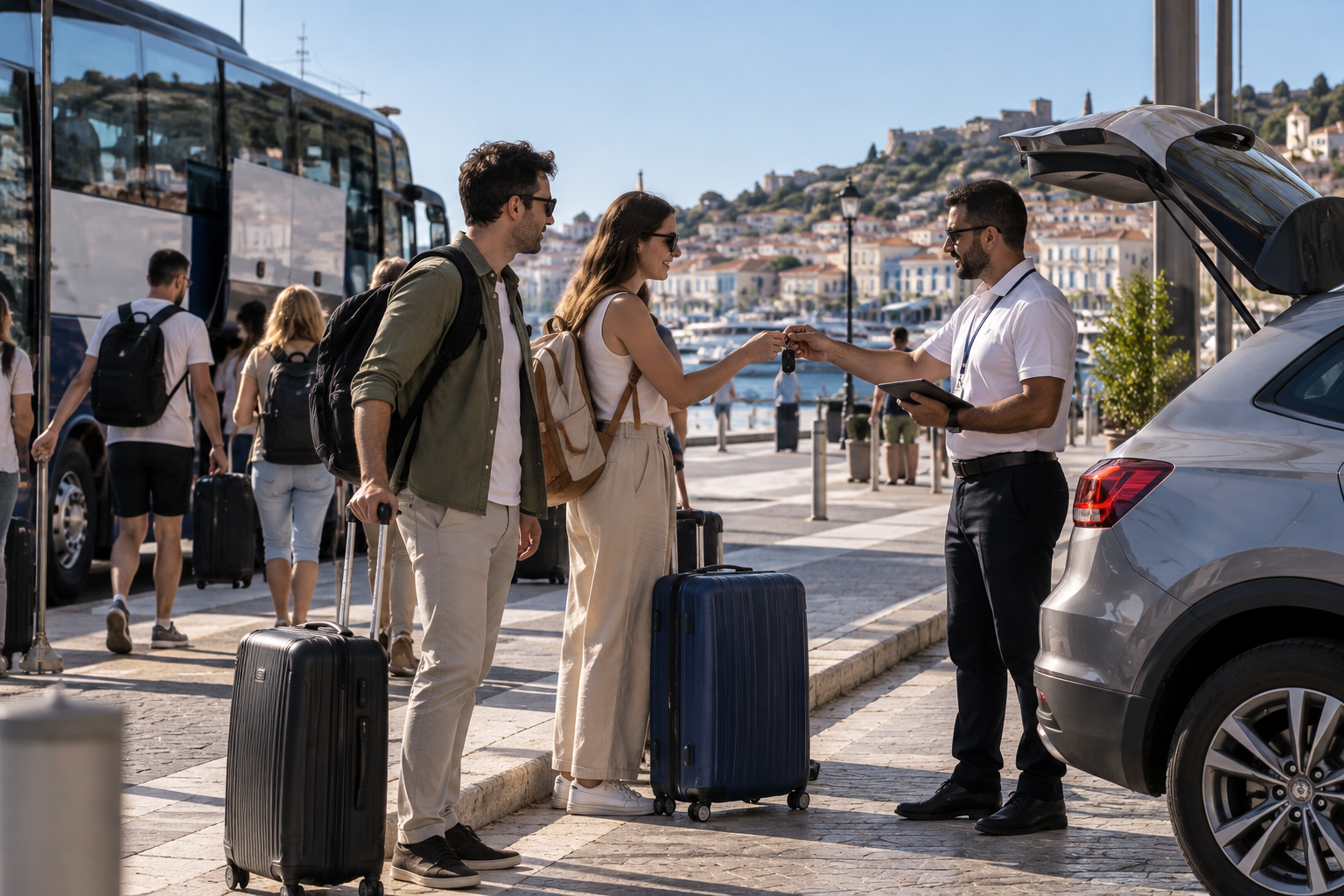
However, the growth of road-based tourism still matters to the car rental industry because it changes the geography and behaviour of travel.
A tourism market that becomes less concentrated around airports may create different mobility needs:
- more demand around regional cities and destinations;
- greater interest in flexible pick-up and drop-off locations;
- more multi-destination itineraries;
- opportunities around ports, railway connections and urban centres;
- increased importance of local rental businesses outside major airport hubs.
The opportunity is therefore not simply “more road arrivals equal more rentals”.
It is about understanding where travellers are going, how they move once they arrive and where mobility demand is developing.
The Greek rental market remains active
Recent industry results provide another useful piece of context.
Autohellas reported that its car-rental revenue in Greece increased by 6.7% in the first half of 2026, reaching €146.6 million.
The company said growth was primarily supported by long-term rentals, while short-term rentals posted more moderate growth but maintained strong profitability. It also noted increasing fleet availability and competition in the market.
Across the group, rental activities operate a fleet of nearly 68,700 vehicles, with approximately 13,400 new vehicles added through investment during the first six months of the year.
These figures should not be treated as a direct measure of tourism rental demand across Greece. They do, however, show a mobility and rental sector that continues to expand while becoming increasingly competitive.
For independent rental businesses, that makes visibility and access to demand even more important.

Tourism growth continues — but the details matter
The wider tourism picture remains positive.
Travel receipts in Greece reached approximately €8.8 billion during the first half of 2026, an increase of 14.8% compared with the same period of 2025.
Inbound traveller flows grew by 15.4%.
At the same time, average expenditure per trip declined slightly, by 0.6%.
This combination illustrates why headline arrival numbers alone never tell the whole story.
Where visitors come from, how they reach Greece, how long they stay, how much they spend and how they move between destinations all matter.
The sharp rise in road-border traffic is one piece of that larger picture.
What travellers gain from a more road-connected Greece
For travellers, the appeal of road-based mobility is easy to understand.
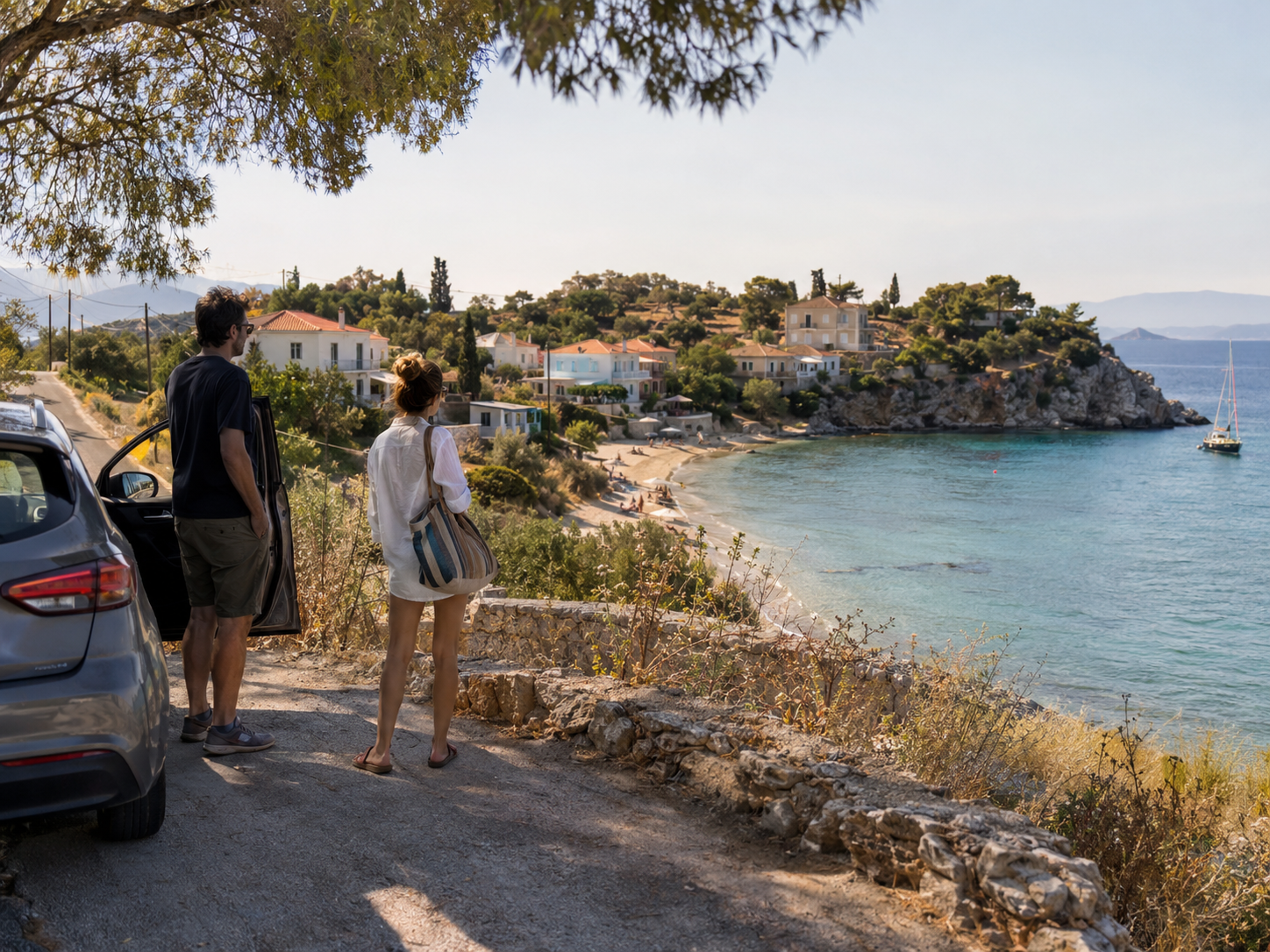
A car allows greater flexibility when visiting regions where public transport may not connect every beach, village, archaeological site or accommodation area directly.
Road trips can also make it easier to change plans, travel outside peak hours and combine destinations that would otherwise require several separate transport connections.
This becomes particularly relevant during the shoulder seasons, when travellers may be less focused on a single resort and more interested in exploring several places during one trip.
Greece’s tourism offer is much larger than its most famous islands.
Road travel can help reveal that.
A trend worth watching
The latest Bank of Greece figures cover the period through June 2026. The next release, covering July, is scheduled for 22 September 2026.
That data will show whether the remarkable road-travel growth seen during the first half of the year continued into the main summer season.
Whatever the next figures reveal, 2026 has already highlighted something important.
The way people reach and explore Greece is evolving.
Airports will remain central to the country’s tourism industry, but roads, borders and regional mobility are becoming increasingly important parts of the picture.
For travellers, that can mean more freedom to explore.
For destinations, it can mean access to visitors beyond traditional air gateways.
And for car rental businesses, it is another reminder that the future of mobility is not only about how many tourists arrive — but also where they want to go next.
Ready to rent your next car in Greece?
Browse available vehicles on WheelDot, compare options, and book online with flexible pickup choices.
Explore more on WheelDot
Popular destinations for car rental
Planning your next trip? Explore some of the most searched destinations on WheelDot and find the right vehicle for your travel needs.